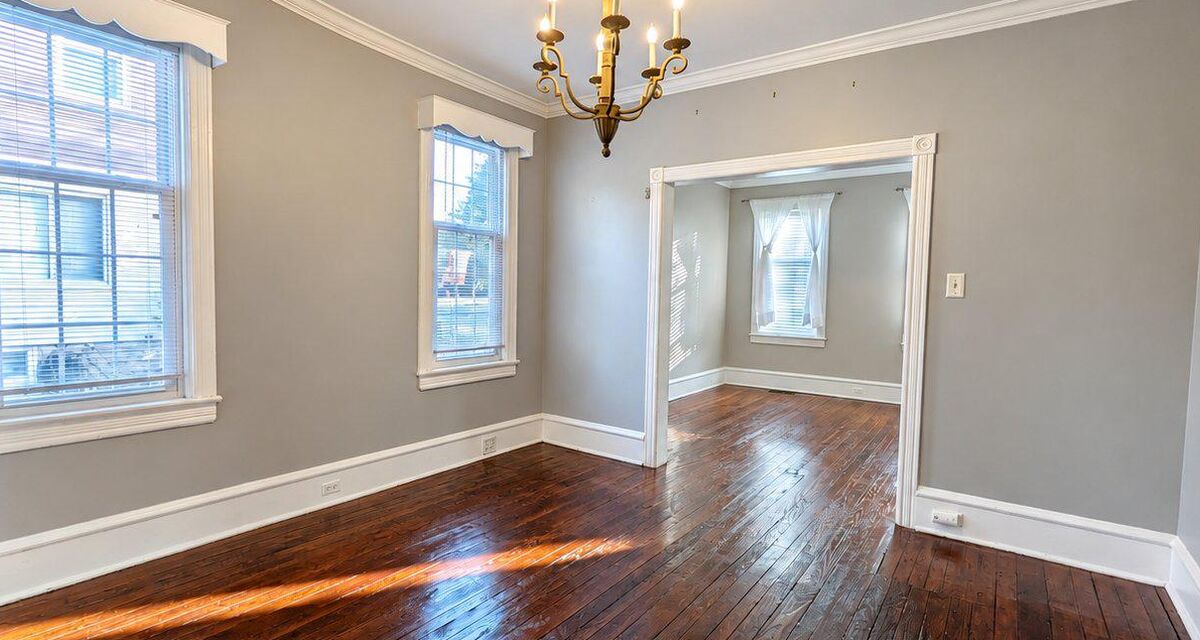
419 Elm Ave is offered at $500,000, which is $277 per square foot. Annual property taxes are $8,362 for 2026 on an assessed value of $204,600. The listing accepts cash, conventional, FHA and VA financing. What that costs you each month depends on your down payment, your rate and your insurance, and a licensed lender is the only person who can put a real number in front of you.
Buyers who call me about a house this age tend to ask the same three things in the same order. What are the taxes. Will a lender finance it. What else is going to cost me that I have not thought of. Here is what I can say about each without guessing.
The numbers as they sit in the listing
| Item | Figure |
|---|---|
| Asking price | $500,000 |
| Price per square foot | $277 |
| Annual property taxes, 2026 | $8,362 |
| Tax assessed value | $204,600 |
| Prior year taxes, 2025 | $7,869 |
| Financing accepted | Cash, conventional, FHA, VA |
| Flood zone | FEMA Zone X, unshaded |
The taxes went up about 6.3 percent from 2025 to 2026 while the assessed value stayed flat at $204,600. That pattern is worth noticing, because it tells you the increase came from the tax rate, not from a new assessment of the property.
Why you cannot read the tax figure as a simple percentage
The assessed value of $204,600 is a little over 40 percent of the current asking price. In New Jersey, a municipality does not assess every property at full market value. It assesses at a percentage set for the town, and the state publishes that ratio each year. That is why the number on the tax card and the number a buyer would pay for the house are so far apart, and why dividing the tax bill by the asking price gives you a figure that is too high.
Two practical points follow. First, ask the Riverton tax assessor for the current assessment ratio if you want to understand how the number was set. Second, in New Jersey a single sale does not usually reset an assessment the way it can in some other states. Changes tend to come from a town wide revaluation or from an appeal. The rules and the timing are the assessor's to explain, not mine, so confirm it there before you build a long term budget around the current figure.
How a lender and an appraiser look at a house built in 1885
An appraiser is answering a narrower question than you are. You are asking whether you want to live here. The appraiser is asking what a willing buyer would pay for this house, in this condition, with these updates, on the day they inspect it.
On an older house, that means three things get looked at closely. What has been updated and when, which here means a major remodel recorded in 2010, updated bathrooms, replacement windows and modern mechanical systems. Whether the work was done in a way that counts, which is where permits and records matter. And what comparable sales exist, which is harder than it sounds in a historic district, because no two Victorians on these streets are the same house and an appraiser has to adjust for that.
If you are financing, this is a conversation to have before you write an offer rather than after. A lender can tell you what the program requires. An appraiser can tell you what they will look at. I can tell you what has happened on other houses like this one in the county, and where the surprises usually come from.
The four routes the listing accepts
| Route | What it means | What to check |
|---|---|---|
| Cash | No lender, no appraisal contingency tied to financing. | Your own inspection and your proof of funds. A cash offer still needs to be a real one. |
| Conventional | A loan not backed by a federal agency, with its own down payment and credit requirements. | Whether the lender wants repairs completed before closing, and how the appraisal compares with your price. |
| FHA | A federally backed loan with property condition standards attached to the house, not only to you. | Which items an FHA appraiser flags. Peeling paint, handrails, roof condition and utilities that are on are common examples. |
| VA | A loan guaranteed for eligible veterans, with its own minimum property requirements. | Eligibility, the funding fee, and the same condition questions an FHA appraisal raises. |
One point worth separating out, because it comes up on every older house. A renovation loan is a different product from a standard loan, even when it carries the same agency's name. An FHA 203(k) loan bundles purchase and repair into one mortgage, and a VA renovation loan does something similar for eligible borrowers. They exist and they are used. They are also slower and more paperwork than a standard loan, and they only make sense if the house actually needs work at closing. This listing records the major remodel as already done, so the standard versions of these programs are the simpler place to start. A lender who writes both kinds of loans can tell you which fits your situation.
What else to budget, beyond the down payment
Closing costs are the line most first time buyers underestimate. Lender fees, title work, recording, prepaid interest and the first year of insurance all land at the closing table, and the total varies by lender and by loan type.
On an 1885 house, three more lines are worth planning for. A thorough inspection, and usually a second opinion from a specialist on the systems you care most about, whether that is the roof, the electric, the plumbing or the basement. An insurance quote on this specific address, obtained before you write, because older homes and river towns both get priced individually. And a repair reserve for the first two years, because something in a 140 year old house will surprise you, and it is cheaper to plan for it than to finance it later at a card rate.
Property taxes and insurance are also part of the monthly number. If you are collecting quotes, ask each lender to show you the full monthly figure with taxes and insurance included, not the principal and interest alone. Zillow shows an estimated payment for this listing, but it is a third party estimate, not a quote, and it will not match your actual rate.
Questions buyers ask me about this
Is $500,000 a lot for Riverton?
It is $277 per square foot for 1,804 square feet with a detached two car garage and three full baths. Whether it is high or low depends on condition and on the comparables your appraiser chooses. Ask for the comps before you decide, not after.
Will a lender finance a house this old?
Yes, and the listing names four routes that all exist for homes of this age. The question is not the age. It is condition, documentation and appraisal.
Can I roll repair work into the loan?
Possibly, through a renovation loan. That is a question for a lender who writes them, and it depends on what work the house actually needs at closing.
What are the taxes going to be after I buy?
Start from the current figure of $8,362 and confirm with the tax assessor how a sale affects it. Do not assume it stays flat, and do not assume it jumps.
Where to go next
If you want the local context behind these numbers, the guide to living in Riverton covers the town itself, from the River LINE station to the historic district rules. If you want to see the house the numbers belong to, the gallery holds all forty three listing photographs.
And if you want a straight answer about what this house would cost you per month, bring your down payment and your credit situation to a licensed lender, then call me with the number they give you. I will tell you whether the deal makes sense from there.
Want the numbers run for your situation?
Tell me your down payment and your timeline, and I will connect you with a lender who works with older homes and walk you through the rest.
Book a Conversation